
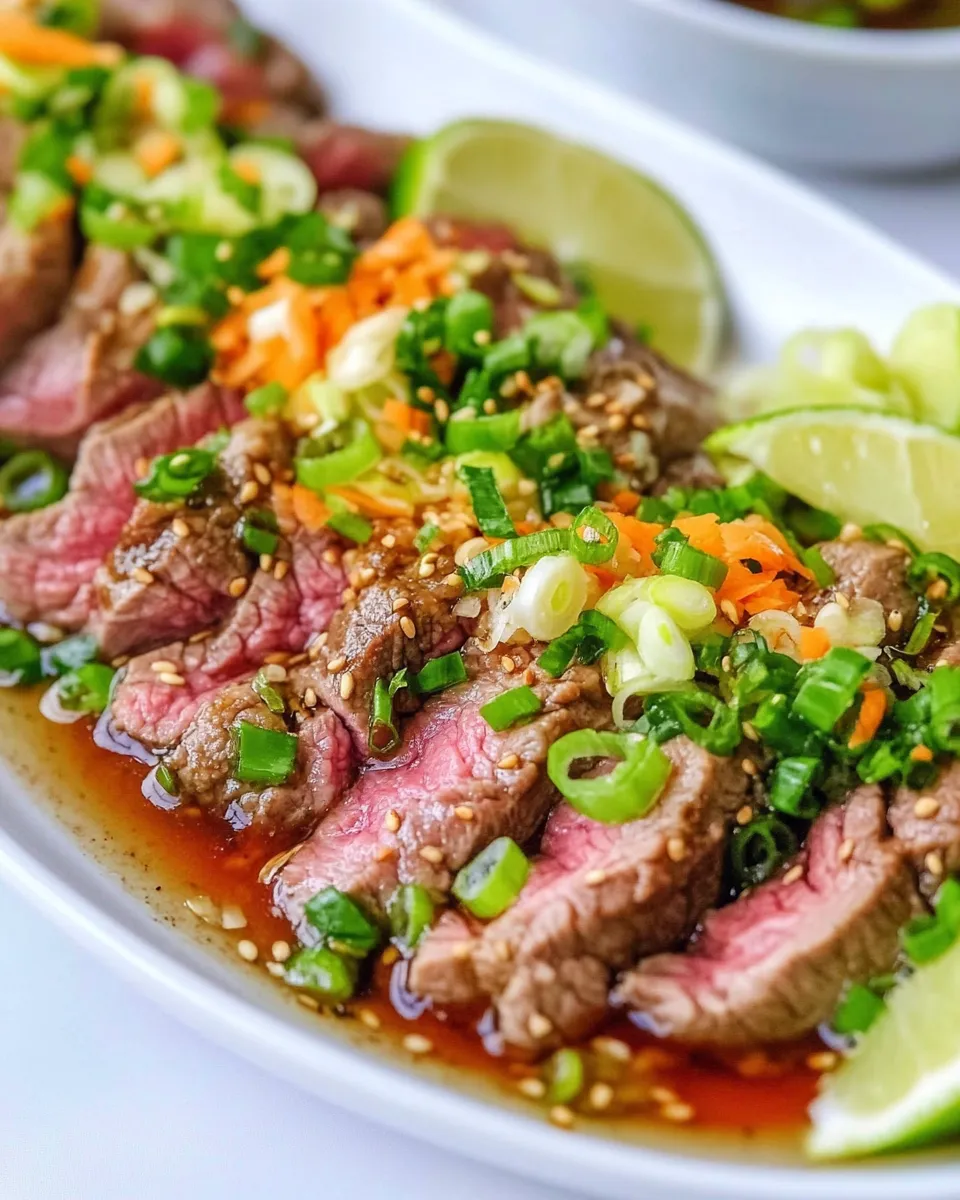
Beef Tataki is a delightful and elegant dish that highlights the natural flavors of high-quality beef. This Japanese-inspired delicacy features seared filet mignon, marinated in a zesty sauce, and is served with fresh accompaniments that elevate its taste. Perfect for an appetizer or a light meal, Beef Tataki is a dish that is both simple to prepare and sure to impress your guests. Let’s dive into the details of what makes this recipe so special!
What Sets This Recipe Apart
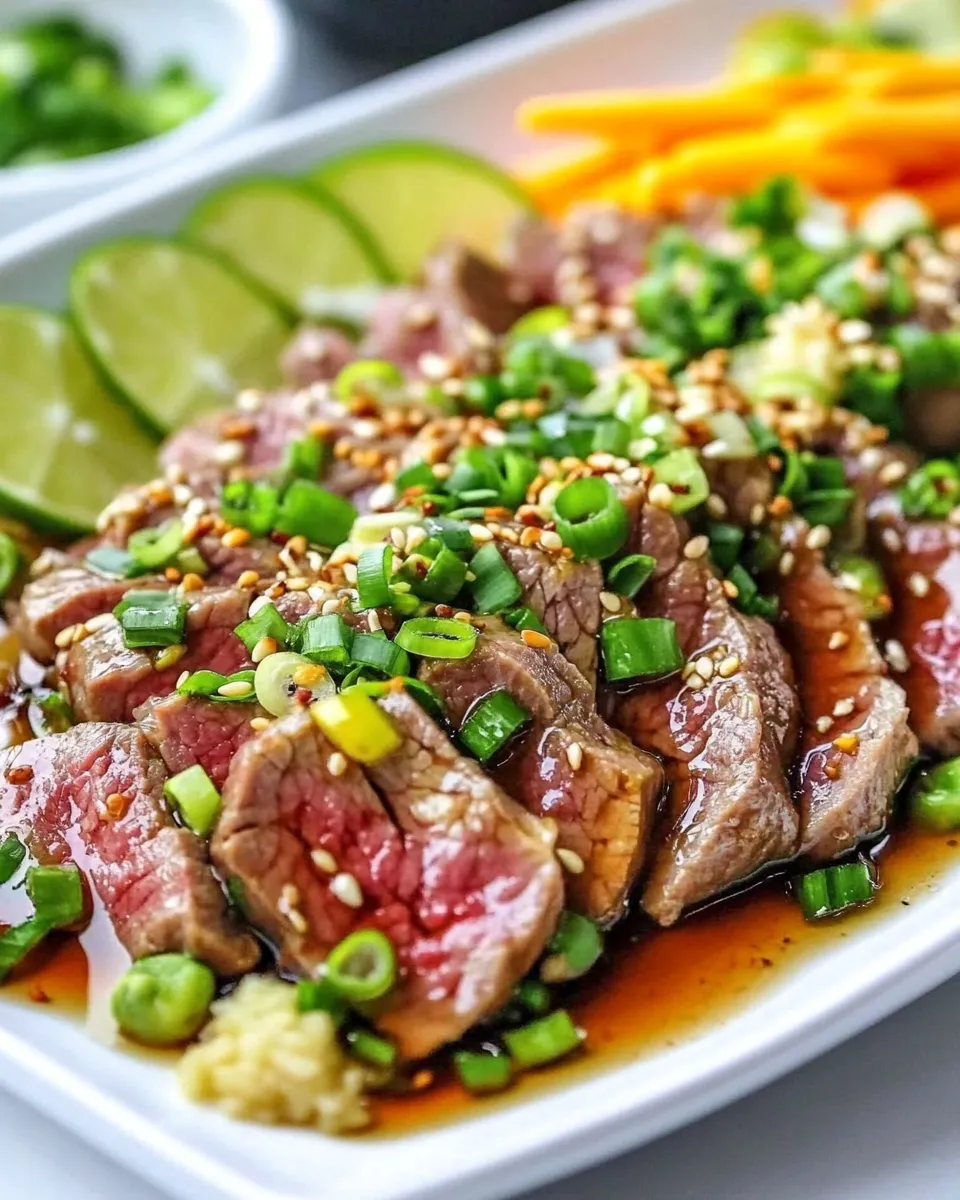
This Beef Tataki recipe stands out because of its balance of flavors and its emphasis on fresh, high-quality ingredients. The marinated filet mignon is cooked just to the point of searing, allowing the beef’s natural tenderness to shine through. The citrusy marinade, combined with the umami notes from soy sauce and Worcestershire sauce, creates a flavor profile that is both refreshing and savory. Adding thinly sliced avocado and crispy fried onions provides both texture and a delightful contrast to the tender beef.
Ingredient Notes
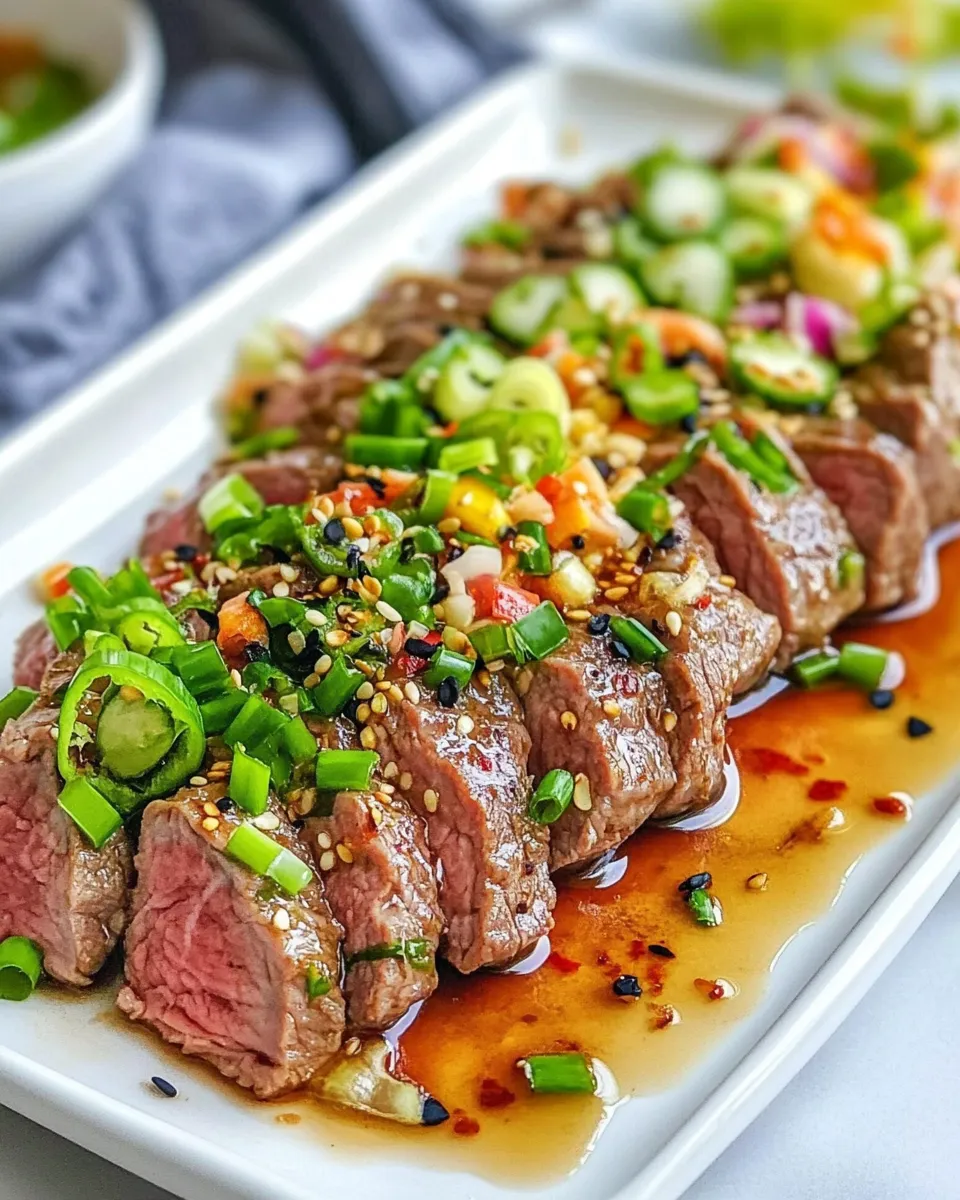
- Filet Mignon: For the best results, choose a fresh, quality steak that is well-marbled for tenderness and flavor.
- Salt and Pepper: Simple seasonings that enhance the beef’s natural taste.
- Unsalted Butter: Adds richness to the dish while allowing better control over salt content.
- Sesame Oil: Provides a nutty flavor that complements the marinade.
- Lime Juice: Fresh lime juice adds brightness and acidity.
- Orange Juice: Balances the lime with a touch of sweetness.
- Grated Ginger: Fresh ginger adds a spicy warmth and depth of flavor.
- Sugar: Enhances the flavors in the marinade and balances the acidity.
- Soy Sauce: A key ingredient for umami flavor; choose a low-sodium version if preferred.
- Worcestershire Sauce: Adds complexity to the marinade.
- Scallions: Minced for garnish and added freshness.
- Avocados: Sliced thinly to add creaminess to the dish.
- Fried Onions: Store-bought or homemade for a crispy texture.
- Coarse Black Pepper: For a finishing touch that adds a bit of heat.
What’s in the Gear List
- Sharp Knife: Essential for slicing the beef and avocado thinly.
- Cutting Board: A clean surface for prep work.
- Frying Pan: For searing the filet mignon.
- Mixing Bowl: To combine the marinade ingredients.
- Meat Thermometer: To check the doneness of the beef, if desired.
- Serving Platter: For an elegant presentation.
Beef Tataki: From Prep to Plate
Step 1: Prepare the Marinade
In a mixing bowl, whisk together the sesame oil, lime juice, orange juice, grated ginger, sugar, soy sauce, and Worcestershire sauce until the sugar is dissolved and the mixture is well combined.
Step 2: Season and Sear the Beef
Pat the filet mignon dry with paper towels and season it generously with salt and pepper. In a frying pan, heat the unsalted butter over medium-high heat until melted and bubbling. Add the filet mignon and sear for about 2-3 minutes on each side, or until a golden-brown crust forms. The center should still be rare to medium-rare, depending on your preference.
Step 3: Marinate the Beef
Once seared, remove the filet mignon from the pan and let it cool for a few minutes. Slice the steak thinly against the grain and place the slices into the marinade. Allow it to marinate for at least 10 minutes to absorb the flavors.
Step 4: Prepare the Garnishes
While the beef is marinating, thinly slice the avocados and prepare the scallions and fried onions.
Step 5: Assemble the Dish
On a serving platter, arrange the marinated beef slices. Top with the sliced avocado, sprinkle with minced scallions, and finish with a handful of fried onions and a sprinkle of coarse black pepper.
Step 6: Serve and Enjoy
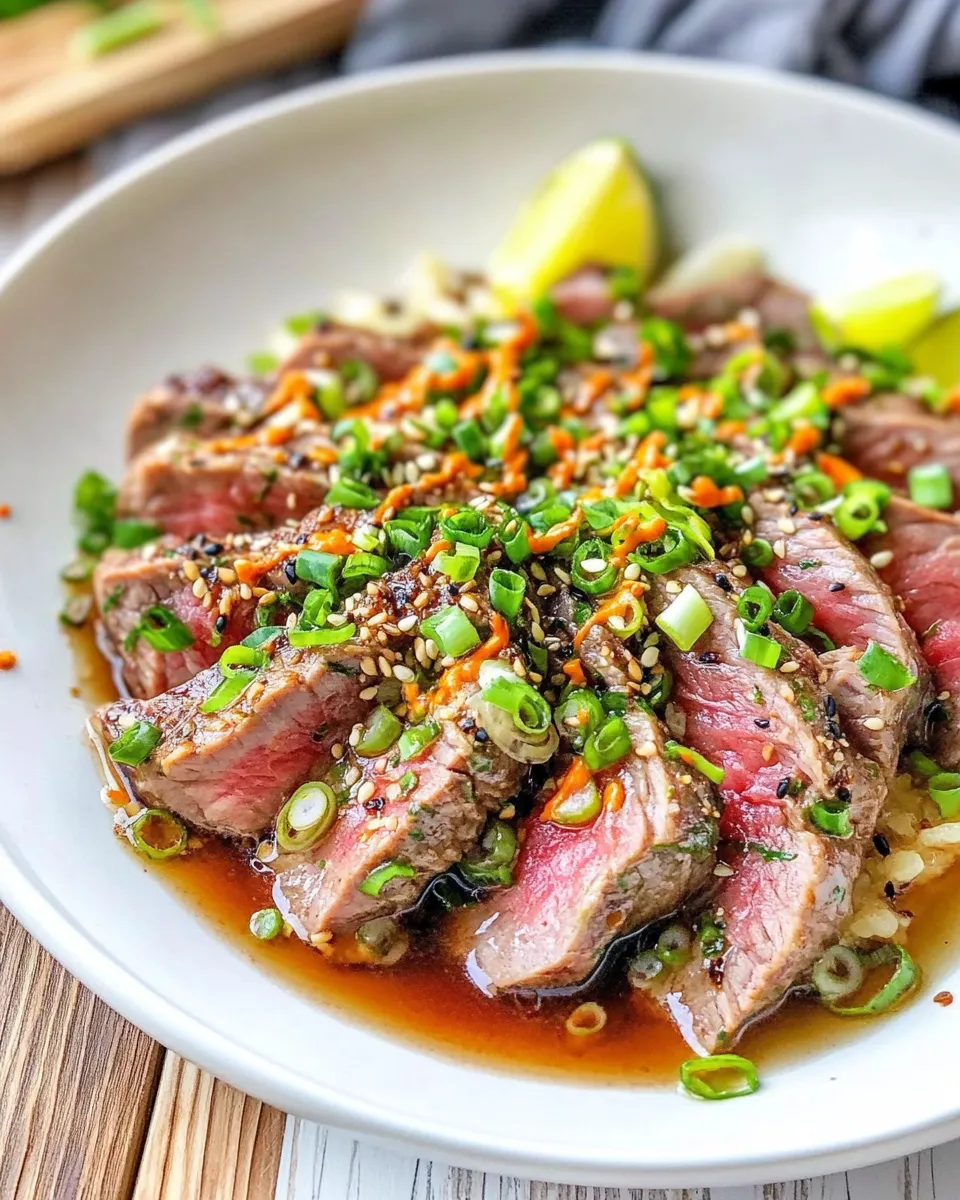
Serve the Beef Tataki immediately, either with toothpicks for easy eating or elegantly plated for a dinner party. Enjoy with a side of the remaining marinade for dipping!
Ingredient Swaps & Substitutions
- Filet Mignon: Can be swapped with sirloin or ribeye for a different flavor and cost-effective option.
- Soy Sauce: Use tamari for a gluten-free alternative.
- Unsalted Butter: Substitute with olive oil or coconut oil for a dairy-free option.
- Fried Onions: If unavailable, you can use crispy shallots or even toasted nuts for crunch.
- Lime Juice: Lemon juice can be used in place of lime for a different citrus flavor.
Mistakes That Ruin Beef Tataki
- Overcooking the Beef: The key to Beef Tataki is the perfectly seared, rare beef. Use a meat thermometer if you’re unsure.
- Using Low-Quality Meat: This dish relies on the flavor and tenderness of the beef, so choose the best quality you can afford.
- Skipping the Marinade Time: Allow the beef to marinate for at least 10 minutes to absorb the flavors; don’t rush this step.
- Not Slicing Against the Grain: Always slice the beef against the grain for tender bites.
Make-Ahead & Storage
Beef Tataki is best enjoyed fresh, but you can prepare some components in advance. The marinade can be made a day ahead and stored in the refrigerator. The beef can also be seared ahead of time; simply allow it to cool, slice it, and store in an airtight container in the fridge. Assemble the dish right before serving to ensure the best texture and flavor. Consume leftovers within two days for optimal freshness.
Beef Tataki FAQs
Can I make Beef Tataki with other cuts of beef?
Yes, while filet mignon is ideal for its tenderness, you can also use other cuts like sirloin or ribeye. Just remember that cooking times may vary based on the cut.
How do I know when the beef is perfectly cooked?
A meat thermometer is your best friend here! Aim for an internal temperature of about 125°F (52°C) for rare or 135°F (57°C) for medium-rare.
Can Beef Tataki be made in advance?
Yes, you can sear the beef ahead of time and marinate it for a few hours. However, it’s best enjoyed fresh for the best texture and flavor.
What can I serve with Beef Tataki?
Beef Tataki pairs well with a light salad, sushi rice, or a side of pickled vegetables to complement the flavors of the dish.
Before You Go
Indulging in Beef Tataki is an experience that combines simplicity and sophistication. With just a few high-quality ingredients, you can create a dish that not only looks stunning on the plate but also delivers an explosion of flavors with every bite. It’s a perfect recipe for impressing friends or enjoying a special night in. Happy cooking, and enjoy every delicious moment!

Beef Tataki
Ingredients
For the Marinade:
- 2 tablespoons Sesame Oil
- 2 tablespoons Lime Juice fresh
- 2 tablespoons Orange Juice fresh
- 1 tablespoon Grated Ginger fresh
- 1 tablespoon Sugar
- 3 tablespoons Soy Sauce low-sodium if preferred
- 1 tablespoon Worcestershire Sauce
For the Beef:
- 1 pound Filet Mignon well-marbled
- 2 tablespoons Unsalted Butter
- to taste Salt
- to taste Pepper
For Garnish:
- 2 whole Avocados sliced thinly
- 2 tablespoons Scallions minced
- 1 cup Fried Onions store-bought or homemade
- to taste Coarse Black Pepper for finishing touch
Instructions
Preparation Steps:
- In a mixing bowl, whisk together the sesame oil, lime juice, orange juice, grated ginger, sugar, soy sauce, and Worcestershire sauce until the sugar is dissolved and the mixture is well combined.
- Pat the filet mignon dry and season it generously with salt and pepper. In a frying pan, heat the unsalted butter over medium-high heat until melted and bubbling. Add the filet mignon and sear for about 2-3 minutes on each side, or until a golden-brown crust forms.
- Remove the filet mignon from the pan and let it cool for a few minutes. Slice the steak thinly against the grain and place the slices into the marinade. Allow it to marinate for at least 10 minutes.
- While the beef is marinating, thinly slice the avocados and prepare the scallions and fried onions.
- On a serving platter, arrange the marinated beef slices. Top with the sliced avocado, sprinkle with minced scallions, and finish with fried onions and coarse black pepper.
- Serve immediately, either with toothpicks for easy eating or elegantly plated. Enjoy with a side of the remaining marinade for dipping!
Equipment
- Sharp knife
- Cutting Board
- Frying pan
- Mixing Bowl
- Meat Thermometer
- Serving platter
Notes
- Use a meat thermometer to check for doneness.
- Allow the beef to rest before slicing for better texture.
- Assemble just before serving for optimal freshness.